-
EchoMoVE: Multi-View Mixture-of-Experts Regression for Echocardiographic LVEF Estimation under Small-Cohort and Label-Imbalance Constraints 14:10–14:20
-
MultiPhys-EF: Decorrelated Multi-Signal Fusion for LVEF Estimation in Cardiotoxicity Surveillance 14:20–14:30
-
Deformation-Aware Expert Fusion for Echocardiographic Left Ventricular Dysfunction Assessment 14:30–14:40
-
EchoSense: Leveraging Foundation-Model Embeddings and Multiscale Temporal Modelling for Early Cardiotoxicity Prediction 14:40–14:50
-
Foundation Model Fine-Tuning with Attention-based Multi-View Fusion for Multi-Task Cardiac Function Assessment 14:50–15:00
-
When to Freeze: A Foundation-Model, Geometry-First Approach to Robust LVEF and Cardiotoxicity Surveillance 15:00–15:10
-
A Unified DINOv2-Based Framework for LVEF Estimation, GLS Dysfunction Classification, and Early Cardiotoxicity Prediction 15:10–15:20
-
Multi-View Beat-Clip Probing of an Echocardiography Foundation Model for Cardio-Oncology 15:20–15:30
- Motion-Aware Multi-Stream Learning for Subclinical LV Dysfunction Detection from Echocardiography Videos
- Pretrained Echocardiography Video Models for LVEF Estimation and LV Dysfunction Classification
- CNN and ViT Backbone Fine-Tuning with Pseudo-Label Segmentations for the EchoRisk Challenge
- Orthogonalising LVEF: Cyclic Consistency and Expert Cavity Supervision
- One Encoder to Address All: Cardio-Oncology Assessment of Left Ventricular Ejection Fraction, Left Ventricular Dysfunction, and Early Cardiotoxicity in Echocardiography Cine Loops
- Task-Specific Adaptation of Echocardiography Foundation Models for the EchoRisk-MICCAI Cardio-Oncology Challenge
- General vs. Echo-Specific Video Foundation Models for Echocardiographic Risk
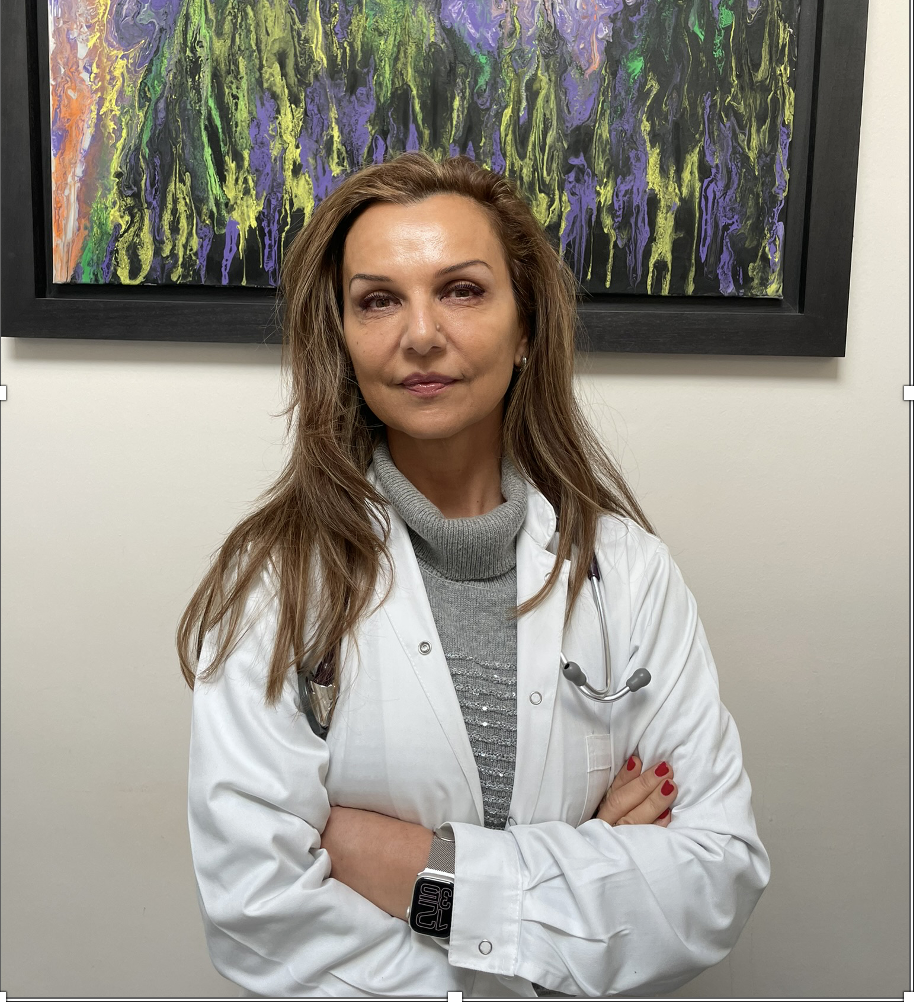
Cancer survival continues to improve, shifting the focus toward the prevention and early detection of cardiovascular complications associated with modern cancer therapies. Echocardiography remains the cornerstone of cardiovascular surveillance throughout the cancer journey. Nevertheless, important challenges persist regarding the timely identification of subclinical cardiac dysfunction, the reproducibility of imaging biomarkers, and their integration into routine clinical decision making.
This keynote provides a comprehensive clinical overview of contemporary echocardiographic surveillance in cardio-oncology, covering both established and emerging imaging biomarkers for cancer therapy-related cardiac dysfunction. The presentation discusses the evolving role of left ventricular ejection fraction, myocardial deformation imaging, and multimodal assessment within current international recommendations, while addressing practical limitations encountered in everyday clinical practice.
A major focus is the rapidly expanding role of artificial intelligence in cardiovascular imaging. Advances in automated image analysis, foundation models, and predictive machine learning are creating new opportunities for earlier detection of cardiotoxicity, personalised risk prediction, and scalable clinical implementation. The keynote demonstrates how clinically driven AI development, supported by initiatives such as the EchoRisk-MICCAI Challenge, has the potential to transform cardiovascular surveillance from reactive diagnosis to proactive risk prediction.
The lecture concludes by outlining future directions for AI-enabled precision cardio-oncology and discussing the importance of close collaboration between clinicians, engineers, and computer scientists in developing robust, interpretable, and clinically deployable solutions.
-
01Understand the current challenges in cardiovascular surveillance during cancer treatment.
-
02Review contemporary echocardiographic biomarkers for early detection of cancer therapy-related cardiac dysfunction.
-
03Explore recent advances in artificial intelligence, foundation models, and machine learning for cardiovascular imaging.
-
04Appreciate the importance of clinically meaningful AI evaluation through benchmark challenges such as EchoRisk-MICCAI.
-
05Discuss future directions for precision cardio-oncology driven by artificial intelligence.